Building in public
2 minute read
Introducing: Morning stability v1.2

Article summary
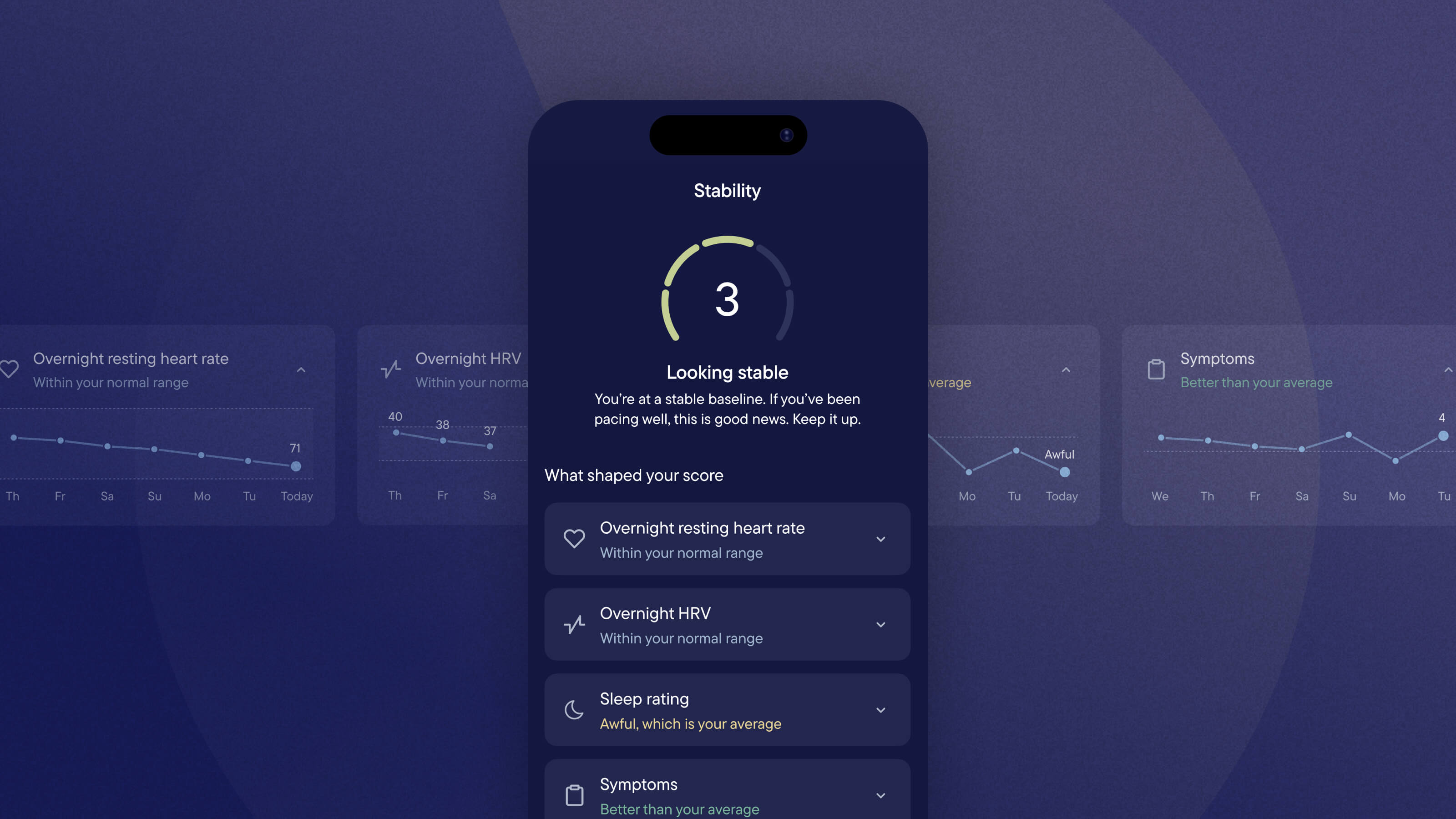
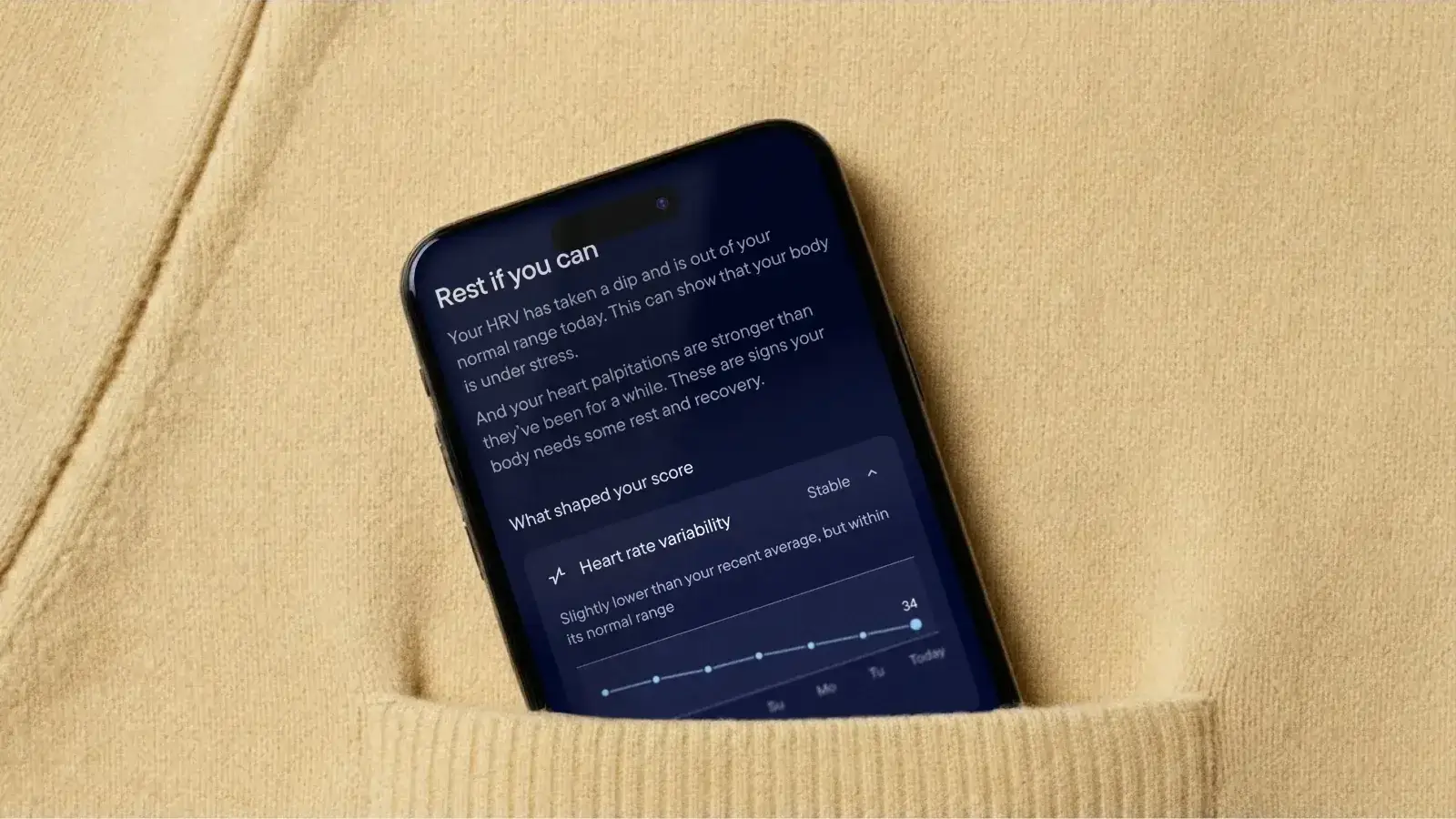
An update to the Morning Stability algorithm. With more data behind us, we can now tell when a rise in HRV is a good sign rather than a sign of strain, so the normal range above your baseline is wider and high HRV is more often read as positive.
Gradual reductions in resting heart rate are now read as improving health too, and the wording of the results has been made clearer.
This week, we're updating the Morning Stability algorithm.
What’s new?
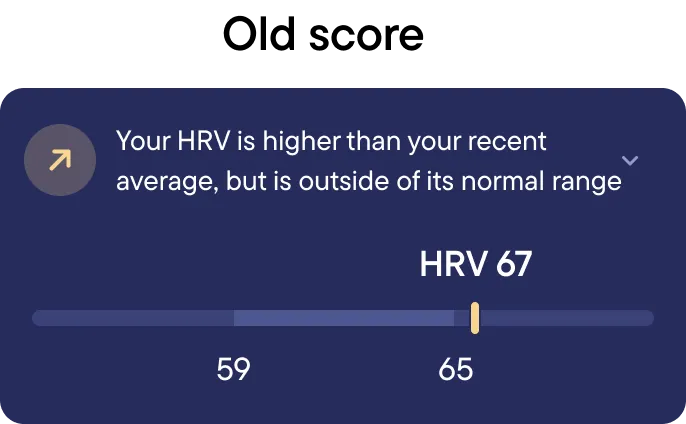
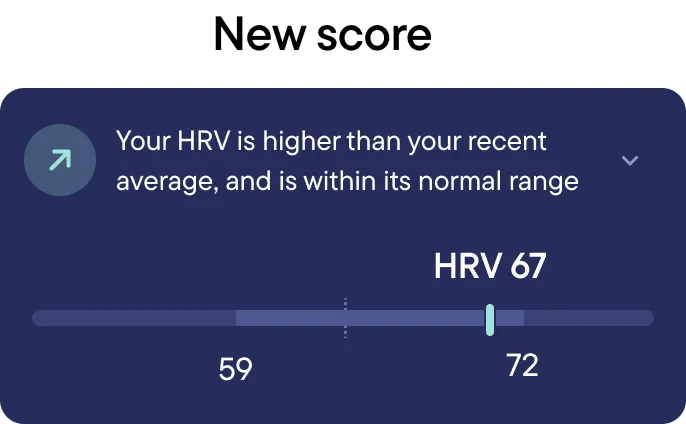
Better interpretation of high Heart Rate Variability (HRV)
One common question about the Morning Stability score is “Why have I received a low score when my HRV is higher than normal?”
While it generally true that higher HRV is typically a good sign because it indicates your body is able to respond to external stressors effectively, stability in your HRV is important too. Large swings in HRV could indicate that your body is out of balance.
In the Morning Stability algorithm, we initially took a conservative approach and assumed that upward swings of HRV were a sign of additional stress. With the benefit of more data, though, we’ve been able to better identify when increasing HRV is in fact a positive signal.
In our latest update, we’ve introduced a wider “normal range” above your baseline HRV. This means that increases in HRV are more often treated as a positive sign, leading to more accurate scores.
We’ve taken the same approach with Resting Heart Rate. Previously a reduction in Resting Heart Rate was interpreted by the algorithm as an indicator of additional stress and instability. The algorithm will now interpret gradual reductions as a sign of improved health.
Improved language
We’ve made some tweaks to the wording we use in the Morning Stability results, we hope this will make the score easier to understand.
What’s next?
All-new in-app studies
We’re still waiting on final approval from various academic partners’ review boards to allow you to opt-in to share your data with researchers around the world. This will come with a big update to the community tab.
Anything else?
We’ve also invited our first few users to join our Early Access Program for Visible Plus, which enables all-day pacing with a wearable device. If you’re interested in getting early access, make sure you are signed up to the waitlist, which you can access from our website.
Your support
Finally, thank you so much for all the messages and feedback we continue to receive. We listen to every bit of feedback, so please keep your thoughts coming. We’ll always respond.
Best
Harry