
What is pacing?
Pacing is a way of balancing exertion with rest to help reduce the risk of symptom flare-ups for people living with chronic illness.




Pacing is a strategy for managing your body's energy
Pacing is recommended by medical organizations around the world. It helps you balance exertion and rest in a way that’s sustainable for your body. Instead of pushing through and crashing afterwards, pacing helps you stay within your body’s capacity consistently, so you can do more over time.

Physical, cognitive and emotional effort all use your body's energy
For some people with chronic illness, doing too much can make symptoms significantly worse. Physical activity, mental effort, stress and socializing can all use energy. Effective pacing means understanding where your energy goes, so you can budget it more effectively.

Pacing vs pushing through – the boom and bust cycle
On a good day, it’s tempting to keep going. But symptoms can take hours or days to appear, so you might not connect a bad Thursday with a busy Tuesday. You rest, recover, then overdo it again. Pacing helps you break the cycle by finding a level of activity you can sustain.
Pacing: a simple guide to getting started
Understanding your body's energy, finding your baseline and planning your days.



Pacing and crashes
When you live with an energy-limiting condition, everyday effort, whether physical, mental or emotional, can come at a cost. Sometimes you feel it straight away. Sometimes it arrives 12 to 72 hours later as post-exertional malaise (PEM), also known as post-exertional symptom exacerbation (PESE).
The symptoms can include fatigue, pain, brain fog and flu-like feelings that last days, weeks or longer. These episodes are sometimes called crashes, and when they're delayed it can be hard to trace the cause.
Pacing helps you balance activity and rest to reduce the risk of these symptom flare-ups.
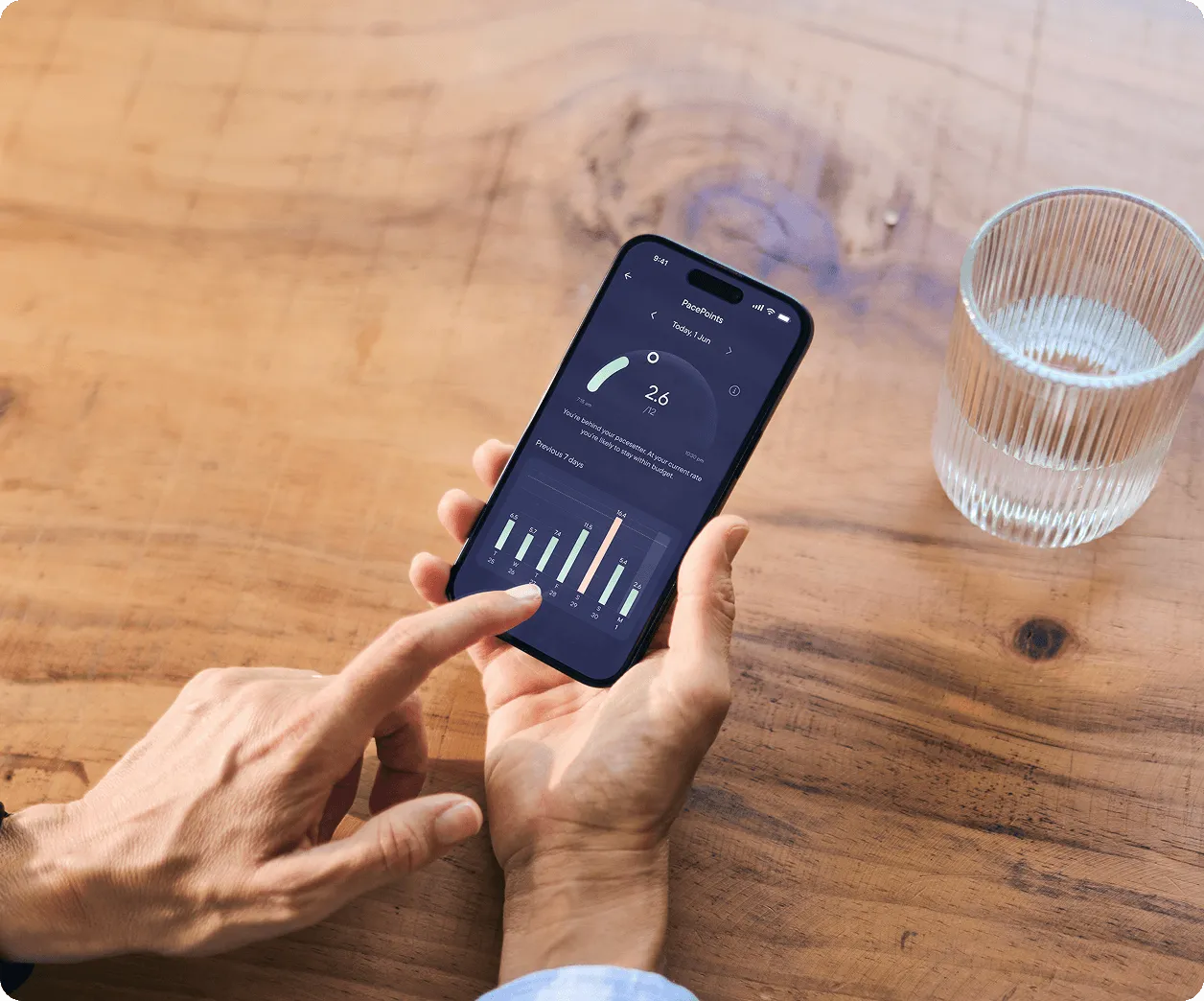
Learn how activity affects your symptoms
Pacing starts with understanding how your body responds to different activities. Because symptoms can be delayed, the connection between what you do and how you feel isn’t always obvious. Tracking your activities and symptoms over time can help you recognize patterns.
Try keeping a record of what you do and how you feel, including physical, mental and emotional activities. You can use a simple diary to get started, or a wearable like Visible to help you track your activity and symptoms.

How to find your baseline
Your baseline is how much activity you can usually manage without making your symptoms worse, even in the days that follow. It’s not your best day, but a level you could repeat day after day.
To find it, look back at your activities and symptoms over time. How much could you do each day without making your symptoms worse afterwards? Look for patterns to understand what feels manageable.
Visible makes this easier. It tracks how much you’re doing throughout the day and suggests a personalized daily budget to help you understand your body’s capacity.

Working with your body’s energy
Use what you’ve learned about your body to plan how you spend your energy. Spread demanding activities across the day and week, and make time for rest before your symptoms get worse.
Pacing isn’t about doing as little as you can. It’s about finding a balance between activity and rest that works for your body, helping you reduce flare-ups while making space for the things that matter to you.
If rest isn’t always possible, be kind to yourself. Planning ahead takes practice, and sometimes, life just has other plans for you.

Rest proactively to prevent symptom flares
A break taken before your symptoms get worse is far more effective than one forced by a crash. That’s what makes rest proactive. It’s planned and deliberate, rather than something you collapse into when your symptoms flare.
Rest is fuel, not failure – but more rest isn’t automatically better. The aim is a sustainable rhythm of activity and rest that your body can rely on.
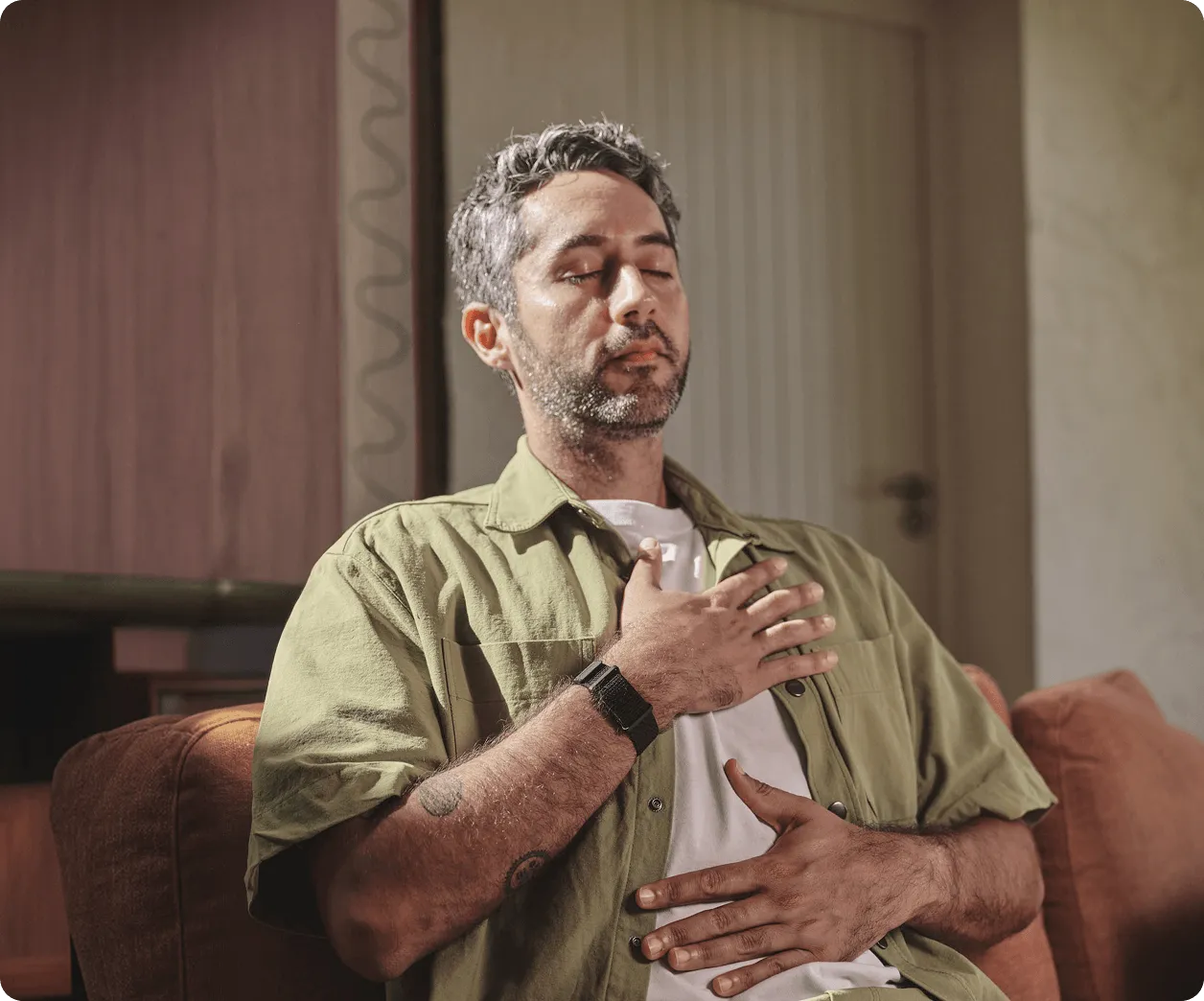
Improving the quality of your rest
Genuine rest is different for everyone, but it could mean stopping screen time, dimming the lights, lying down or simply releasing the pressure to push through.
In complex chronic illness, your body can get stuck in ‘fight or flight’ mode. Regulating your nervous system can help your body shift into a more restful state.
Breathing exercises can be a useful part of pacing, helping to make your rest more restorative.

“It can be hard to know how much you can do before experiencing symptom flare-ups. Your body doesn’t always warn you when you’ve done too much – something that feels manageable can leave you feeling worse hours or even days later. What you’re able to do can also change from day to day. Pacing often means making lots of small decisions every day without enough information.”
David Putrino
Professor of Rehabilitation and Human Performance at Mount Sinai, USA.
How biometrics take guesswork out of pacing
Heart rate and heart rate variability (HRV) provide objective signals about exertion and recovery, helping you understand how your body is doing daily and over time.

Heart rate
Your heart rate closely tracks physical exertion, giving you a real-time signal of how hard your body is working. Visible is an always-on heart rate monitor. It gives you real-time feedback to support pacing.


Heart rate variability (HRV)
Heart rate variability (HRV) is the tiny variation in time between each heartbeat. It reflects how your nervous system responds to stress, activity and rest. In complex chronic illness, HRV is often lower and commonly associated with fatigue, higher symptom burden, and reduced recovery. Visible tracks your HRV to help you understand when your body is recovering well and when it may be carrying more strain.
Frequently asked questions
In medical terms, pacing is an energy management strategy for people with energy-limiting conditions such as ME/CFS and Long Covid. It involves balancing physical, cognitive and emotional activity with rest, staying within your body’s capacity to reduce symptom flare-ups.
Pacing is recommended for ME/CFS and Long Covid by leading health bodies, including the US Centers for Disease Control and Prevention (CDC) and the UK’s National Institute for Health and Care Excellence (NICE).
Pacing is used in complex chronic illnesses to reduce the risk of symptoms worsening after physical, cognitive or emotional exertion.
Pacing is recommended for people with ME/CFS and Long Covid who experience PEM by leading health organisations, including the CDC and NICE. While formal clinical guidance is more limited for POTS, fibromyalgia and EDS, pacing is also widely supported by patient organisations and informed by the experiences of people living with these conditions.
Post-exertional malaise (PEM) is a worsening of symptoms after physical, mental or emotional effort. It may include fatigue, pain, brain fog, sleep problems and flu-like symptoms, and can last for days, weeks or longer.
You may also hear this called post-exertional symptom exacerbation (PESE). Some people prefer this term because ‘malaise’ can sound like mild tiredness, when in reality, PEM can be both severe and disabling.
The effort that triggers PEM can be smaller than you might expect, such as a shower, a stressful phone call or a busy day. Symptoms often appear 12 to 72 hours after the activity that triggered them, although they can begin sooner or later. This delay can make it difficult to recognise what’s causing your symptoms to worsen.
Pacing helps you balance activity and rest to reduce the risk of PEM. Tools like heart rate monitoring can support pacing by helping you recognise when you’re exerting yourself, rather than relying on symptoms alone to know when to rest.
When you live with an energy-limiting condition, it’s not always easy to recognise when you’re doing too much. By the time your symptoms worsen, you may already have exceeded your body’s capacity.
Heart rate monitoring gives you a real-time indication of how hard your body is working. It can help you understand how much energy different activities demand, how that adds up throughout the day, and when you might need to slow down or rest.
By working towards a daily energy budget that’s right for your body, you can make more informed decisions about how to balance activity and rest, rather than relying on symptoms alone.
Pacing can help you make the most of the energy you have, so you can prioritise the things that matter most to you.
The main goals of pacing is to reduce symptom flare-ups. It can help reduce how often symptoms worsen, how severe they become and how long they last. For people who experience post-exertional malaise (PEM), pacing may also help reduce the risk of more prolonged symptom worsening from repeatedly doing too much.
By avoiding the cycle of doing too much on good days and feeling worse afterwards, pacing can help you find a steadier rhythm. This can make everyday life more predictable and easier to plan.
Over time, pacing can also help you better understand your body’s capacity and how different activities affect you, helping you make more informed decisions about what to take on each day.
You may hear the terms ‘energy envelope’ or ‘spoons’ used to describe your body’s available energy.
Spoon theory was coined by writer Christine Miserandino in 2003, using a set number of spoons to show that energy is limited each day. Once a spoon is gone, it’s gone. The energy envelope works the same way: ‘staying within your energy envelope’ means the amount of activity you can do without triggering a flare.
At Visible, we use the term ‘energy budget’, because it’s a simpler phrase. But these terms all describe the same experience.
