The science
3 minute read
Reinfection in Long Covid and ME/CFS: new findings
The latest study using data shared by Visible users offers new insights into how reinfection may affect people living with Long Covid and/or ME/CFS.
Article summary
- A new study using data shared by Visible members, published in Nature Portfolio’s Scientific Reports with PLRC, University of Bern and UCSF, looks at how Covid reinfection affects people with Long Covid and ME/CFS
- Repeat infections were linked to worse symptoms afterwards, along with a higher resting heart rate and a small drop in heart rate variability during the infection
- Health before infection mattered: higher functional capacity was linked to milder symptoms, while a recent crash was linked to worse outcomes
- Because Visible members track symptoms, heart rate and functional capacity daily, researchers could see what happened before, during and after each infection, not just at appointments
- Members can contribute to future research via Community → Research in the Visible app
The latest study using data shared by Visible users, offers new insights into how reinfection may affect people living with Long Covid and/or ME/CFS.
The findings suggest two main things:
- Repeat infections may worsen symptoms
- Health before an infection may also shape recovery afterward
We first announced this research in 2025, and the findings have now been published in Nature Portfolio’s Scientific Reports.
The study was led by Rachel Robles, a researcher with the Patient-Led Research Collaborative and the University of Bern. It brought together researchers from both organizations, alongside University of California, San Francisco and Visible.
Repeat infections may worsen symptoms
The clearest finding from the study was that repeated Covid infections were associated with worse symptoms afterwards.
As the number of infections increased, the researchers saw:
- a gradual rise in post-infection symptom severity
- higher resting heart rate during the acute infection
- a small drop in heart rate variability during the acute infection
This doesn’t mean that every reinfection will definitely make someone worse. But it adds to the evidence behind what many people already report: that reinfection can make symptoms worse.
Health before infection may influence recovery
The results also suggest that someone’s health before infection may be particularly important for long-term outcomes.
People with higher functional capacity before infection tended to have lower symptom severity and fewer symptoms afterwards. By contrast, people who had experienced a recent symptom crash tended to have worse symptom severity after infection.
More research is needed to understand these factors. But the findings reinforce two important messages: reducing the risk of reinfection remains important, and supporting health before an infection may also influence recovery afterwards.
What the researchers did
To study these questions, researchers analyzed health data shared by Visible members living with Long Covid and/or ME/CFS.
They looked at data from before, during and after Covid infections, including symptoms, heart rate, heart rate variability and functional capacity.
The researchers then used causal AI to explore possible cause-and-effect relationships within the data. This approach can help identify plausible causal pathways, but it cannot prove causation on its own.
Visible data gives researchers more insights
Most reinfection studies rely on healthcare records, which can miss what happens between appointments. For conditions where symptoms can change from day to day, that leaves out important context.
Visible offers a different way to study these conditions.
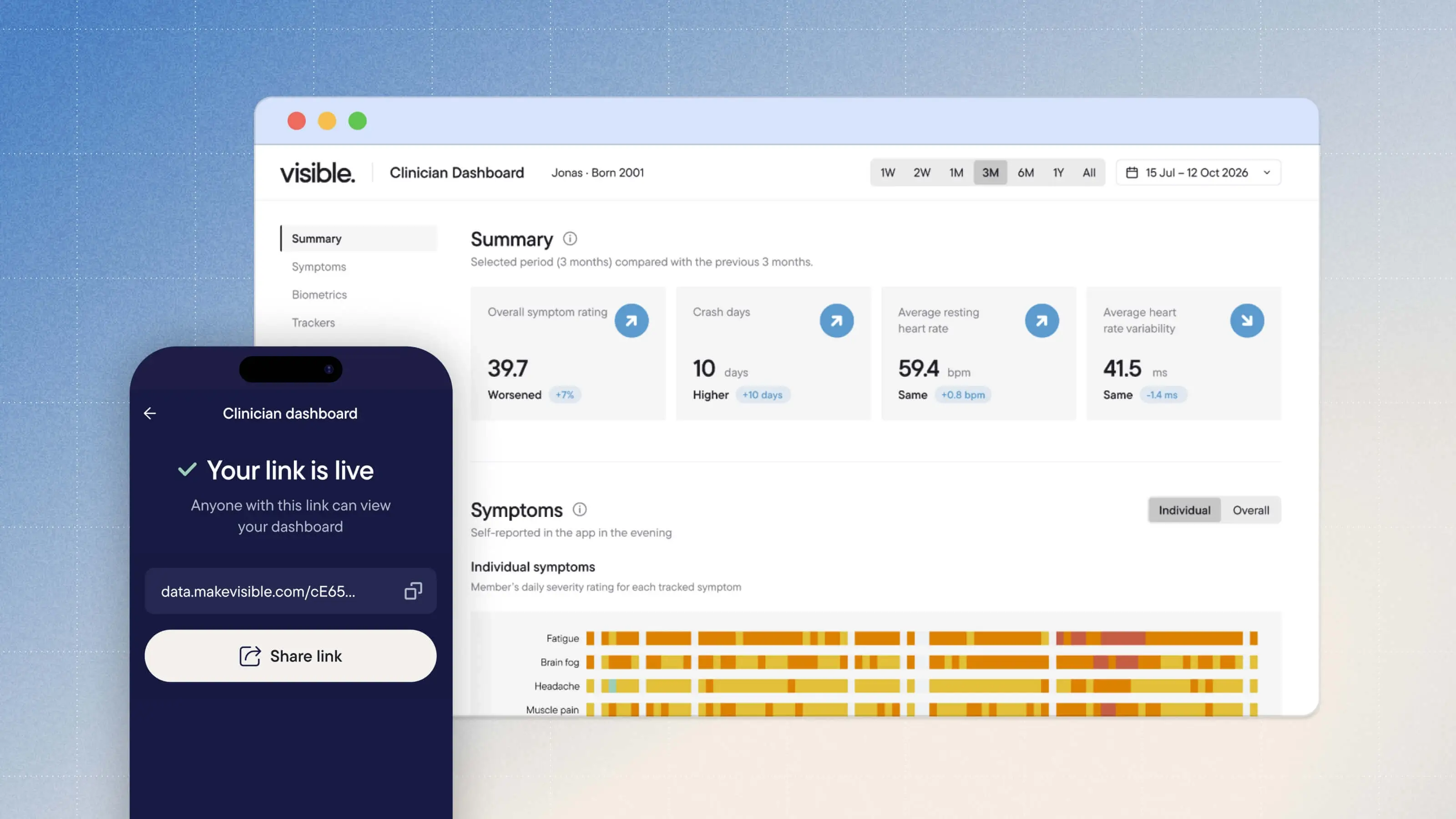
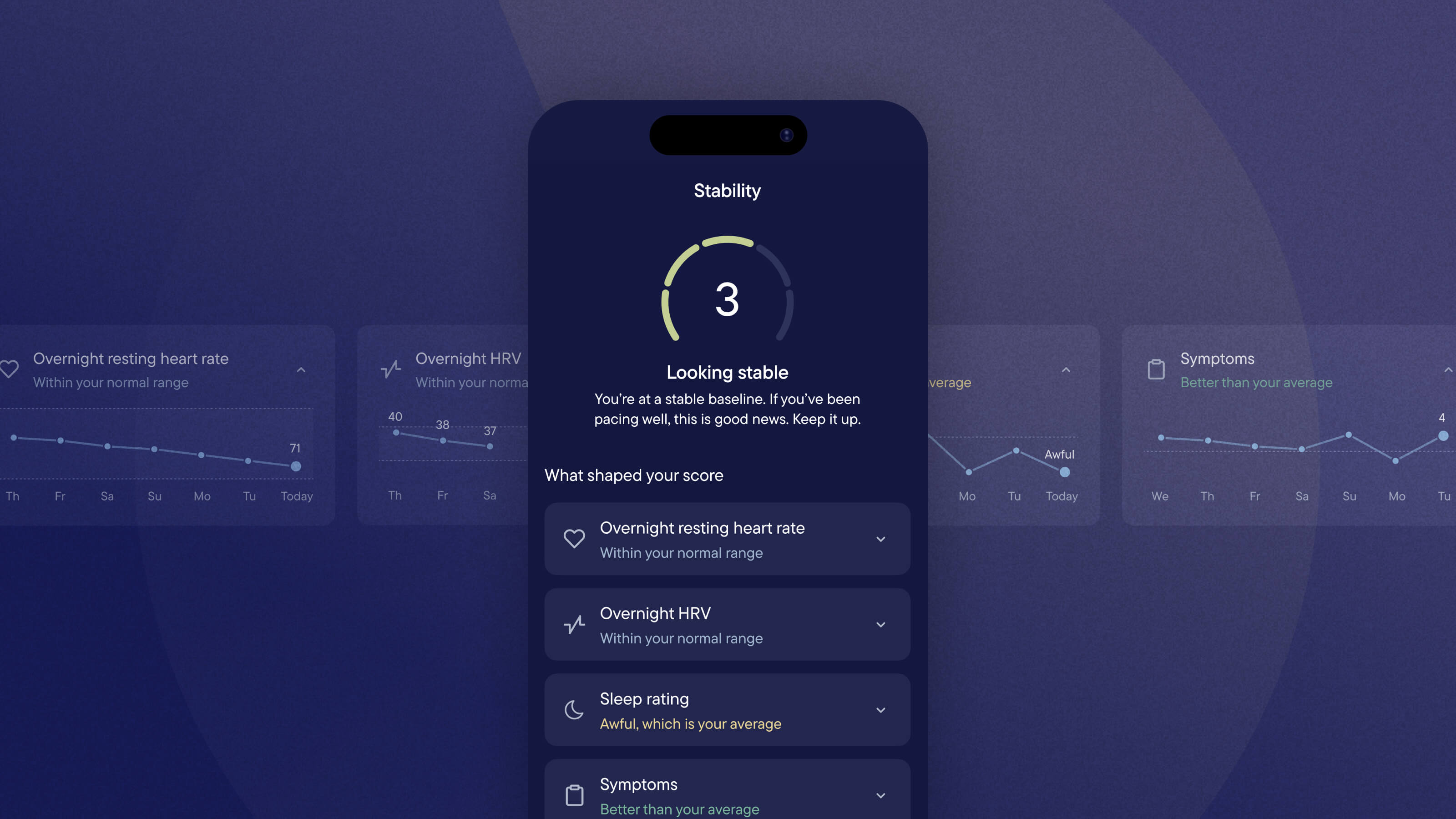
By tracking symptoms, heart rate, exertion and functional capacity over time, Visible data can give researchers a more detailed picture of what was happening before, during and after infection.
Your data can help advance research
This research was made possible by Visible members who chose to contribute the health data they were already tracking.
It’s another example of how anonymized patient-generated data can help researchers ask new questions and build a better understanding of these conditions.
Want to help advance our scientific understanding of complex chronic illness? Open the Visible app and go to Community → Research to see current available opportunities.
Read the full paper
Read the full study in Nature Portfolio Scientific Reports.
Brand Lead at Visible